Blog / Houston Cadillac Service

How Often Should You Replace Your Brake Pads?

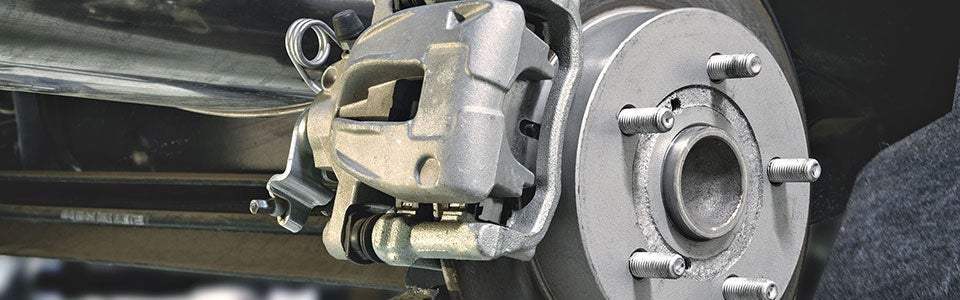
Brake pads are the reason your vehicle is able to stop. They allow drivers to adjust their speed however they want and whenever necessary. Driving with damaged brakes puts you and other road users at a higher risk of accidents. Here are signs you need to get new brakes from a certified Cadillac dealer.

5 Signs You Need to Get New Brake Pads from a Cadillac Dealer

1. Vibrating Brake Pedals

When you start experiencing vibration on the brake pedals or the entire car while trying to slow down, there's a problem. If your pads are contaminated with dirt or oil, vibration will occur when the pads clamp on the rotor. You may also have an improper wheel alignment or a warped or cracked brake disk.

2. Takes Longer to Stop

If you're taking longer than usual to stop, you need to reach out to your dealership as soon as possible. When a car's brakes are used over a prolonged period and are worn out, they are unable to add the necessary pressure on the rooter to immediately stop the wheels from spinning.

3. Brake Fluid is Leaking

If you have a brake fluid leakage, you definitely need a brake job. The brake system is meant to be closed, so if you're rapidly losing brake fluid, you should be concerned. The easiest way to confirm if you have a brake fluid leak is by checking under the car. You may have a leak if there's a small puddle of fluid beneath your car. The fluid is light yellow when fresh and gets darker as it ages.

4. Strange Noises

If your brakes almost reach their end-life, they'll produce squeaking or squealing sounds. Extremely worn-out pads often cause squealing sounds. Once completely worn out, they'll start producing a grinding noise, eventually destroying your rotors, which will be more expensive to repair.

Some modern brakes have metal wear indicators that are designed to produce loud sounds and warn drivers when it's time to get new pads.

5. Warning Light Appears

When you start your vehicle, it carries out a bulb check. All bulbs illuminate on the dashboard, and as every bulb passes its test, it's turned off. If you see the brake warning light or any other light, you shouldn't ignore it. The most likely reason is that the brake fluid levels have gone extremely low, hence requiring a top-up.

Always check the brake fluid reservoir to ensure it's at the right fluid level to maintain perfect performance. Contact your dealership if you try to fill the brake fluid, but the warning lights still show up.

Immediately you notice any of the signs above, visit us at Bayway Cadillac. Our factory-trained technicians are always ready to diagnose and fix whatever issues you may have with your Cadillac vehicle.

Image Via
Posted in:

Related Posts

5 Signs Your Cadillac Needs New Tires

You may not know that your new Cadillac is protected from sudden punctures by advanced run-flat tires. This tire within a tire allows for 50 miles of extra driving after a problem develops, giving you plenty of room to reach your nearest Cadillac dealer. Despite this snazzy feature, you shouldn't depend on run-flat tires alone to keep you safe from blowouts. Keep an eye out for the following signs that you should get yourself new tires sometime soon. 5 Signs Your Cadillac Needs New Tires Bubbling Tire Rubber Impacts with curbs, potholes, or objects on the road can cause a tire to bubble or blister. Sometimes a blister means an internal puncture has happened and air has escaped the inner tubing, seeping out to become trapped under the upper surface layer. Any such bubbling means the tire has lost a great deal of its structural integrity and is now at risk of blowing out. You'll have to replace it. Deep Cuts and Cracks If you see a cut in the treads or the sidewall that's over an inch in length and deep, the tire is weakened and probably needs to be replaced. Over time, the moisture and chemicals in tire rubber can dry out, which leads to myriad little cracks. When these cracks become visibly deep, the tire is also weakened and will need to go. Exposure to UV rays in sunlight and extreme weather conditions can accelerate this drying-out process. Insufficient Tread Depth The depth of tire treads naturally shrinks over time. Fresh tires start with a tread depth of 10/32 of an inch or more. When this depth nears 2/32 of an inch, it's time to consider replacements. With insufficient depth, your treads will no longer be able to guarantee proper traction on road surfaces. Inexplicable Air Loss It's advisable to check the pressure of your tires once or twice a month and more frequently during winter. The ideal pressure for most Cadillac tires is 35 pounds per square inch (PSI) in both the front and rear tires. But this can vary across models, so check the recommended PSI in your owner's manual. While checking tire pressure, if you notice that one tire is losing pressure each time and you can't explain why then you might have a hidden puncture. That tire will have to go. Your Cadillac Dealer Recommends a Change of Tires As with any car part, the key to tip-top maintenance is regular servicing visits. During your regular checkups, the technician will check your wheels and tires and find any faults you might have missed. Have your tires inspected or replaced today at Bayway Cadillac Southwest. We're the region's go-to dealership for all things Cadillac. Image via

Does Your Cadillac Need a New Catalytic Converter?

By law, your Cadillac needs a fully functioning catalytic converter to help keep the air clean. But the remarkably complex inner workings of a converter can sometimes go awry, clogging up the release of air and fumes from your vehicle. This can lead to engine problems and dangerous fumes leaking into the cabin. Let's take a look at three clear signs that it's time to visit your local Cadillac dealer to repair or replace your cat. Does Your Cadillac Need a New Catalytic Converter? Your Engine Loses Power When a converter clogs up, the airflow through your car is interrupted. This means less oxygen can enter the fuel-air mixture in the engine's combustion chambers, which rapidly becomes unbalanced. As a result, your cylinders will be firing less efficiently, and your engine will lose power. A loss of engine power means your acceleration will become sluggish and your fuel economy will drop. You might see black smoke emerging from your tailpipe. You'll start idling roughly as your cylinders begin to misfire, and your Cadillac might even stall. You'll also be given a warning of all this when the check engine light comes to life on your dashboard. A Technician at Your Cadillac Dealer Can Diagnose the Problem Engine performance problems can be caused by a faulty converter or several other issues. For example, your air filter might be clogged, your spark plugs or ignition coils might be malfunctioning, or your fuel injectors could be at fault. To be sure, it's best to have a qualified technician examine your car and diagnose the problem. You Smell Sulfur When the chemical process inside your cat stops converting toxic emissions into less harmful gases, you'll probably smell the difference. One emission in particular has a distinct sulfury stench similar to that of rotten eggs. Those sulfury fumes are also harmful to your health, so pay attention to your nose and have your cat inspected as soon as you detect a rotten egg smell. You Hear Metalling Rattling As it hangs underneath your vehicle, a converter can occasionally become battered or dented by a rock, curb, or pothole. When this happens, the delicate honeycomb mesh inside the stainless steel casing will often break or come loose and start to rattle about. If you hear rattling from below, check under your car for visible signs of damage to the converter. Sometimes the converter itself comes loose in its brackets, which will cause an even louder rattling. You'll most likely need an experienced technician to judge the damage to the converter and decide whether to replace it or not. Have your cat examined, repaired, or replaced today by knowledgeable professionals at Bayway Cadillac Southwest. We're a trusted local dealership dedicated to providing the region's Cadillac drivers with a customer experience as luxurious as our cars. Image Via

3 Signs Your Cadillac Needs a Radiator Repair

Your Cadillac's radiator is essential for your engine's efficiency. It takes in heat from your engine and cools it via heat exchange. This process is necessary to control your engine's temperature and prevent it from overheating. Parts can wear out or get damaged in time, and you'll need a radiator repair. As your Cadillac dealer, we'd like you to know signs that your radiator may be having problems. 3 Signs You Need a Radiator Repair at Your Cadillac Dealer Damaged Water Pump The heat generated by your engine is absorbed by liquid coolant. The now-hot coolant is taken to your radiator when the heat is removed by heat exchange. Once the heat is removed, the coolant is recirculated through your engine to continue the process. The water pump controls the flow of the coolant. When the engine temperature reaches a preset point, coolant is released into your engine. As soon as the coolant is released, the water pump switches on and starts to pump the coolant. If your water pump fails, the released coolant won't be able to move. Without coolant, your engine will rapidly overheat. We can replace the pump to fix this problem. Leaking Radiator Hose Two tough rubber hoses connect your radiator to the rest of your cooling system. These hoses are reinforced and able to withstand the constant flow of coolant that can be as hot as 300 F. One of these hoses feeds coolant into the radiator, and the other draws it back out again. In time, these hoses can suffer wear and tear due to the hot, pressurized coolant. We regularly check your hoses as part of your regular services. The hoses can become less flexible, which leads to cracks in the surface of the now less elastic rubber. Even a tiny hole in one of the hoses will cause hot coolant to spray out into the engine compartment. Our technicians can test your hoses and replace them if they're damaged. Blocked Radiator Tubes When the coolant enters your radiator, it enters horizontal rows of thin metal tubes. Airflow through the grille blows over the tubes as your car moves and cools the hot liquid inside. Unfortunately, the air isn't the only thing drawn in through the grille. Sand, small stones, and other hard debris can also be pulled into the grille with the air. The radiator tubes are very delicate and can be easily damaged by even grains of sand. As more tubes become dented or damaged, this will reduce the surface area for cooling, and your engine will get hotter. We can't fix the damaged tubes, but we can replace the radiator to fix this problem. If your engine is running too hot, call us ASAP at Bayway Cadillac Southwest. Image Via